Global sales of analog wristwatches grew 12% in 2025 — the third consecutive year of growth — while smartwatch growth has plateaued. The trend cuts across demographics: Millennials and Gen Z are driving the revival, often purchasing analog watches as their first significant accessory investment.
The Digital Exhaustion Factor
The appeal of an analog watch in 2026 is partly aesthetic and partly philosophical. In a world where every device demands attention, a watch that only tells time has become a subtle form of resistance. It lets you check the time without being pulled into an ecosystem of notifications, health metrics, and app alerts.
A 2025 survey by the Federation of the Swiss Watch Industry found that 68% of analog watch buyers under 35 cited "digital detox" as a motivation — not because they were abandoning technology, but because they wanted one item on their body that didn't require a charge or an update.
Investment vs. Fashion
The secondary market for mechanical watches has cooled from its 2022 peak, but the entry-level segment (under $500) remains strong. Brands like Seiko, Orient, Tissot, and Hamilton offer mechanical movements — watches with no battery, powered entirely by springs and gears — at accessible prices.
A well-maintained mechanical watch can last decades, often gaining character and value rather than depreciating. It's one of the few accessories where buying quality is genuinely economical over time.
How to Start
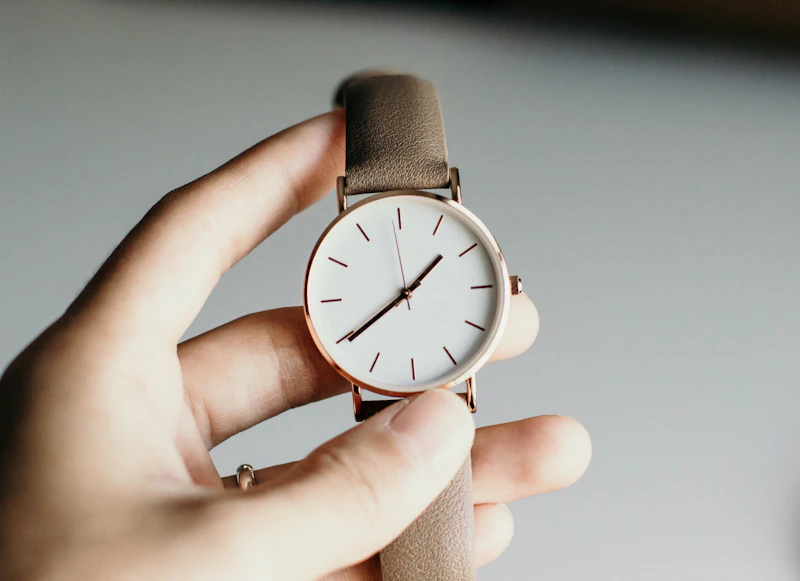
If you've never worn a watch, start simple: a 38–40mm case diameter works on most wrists, a leather or canvas strap is more comfortable than metal for beginners, and a clean dial with minimal complications (subdials, date windows) looks intentional rather than cluttered.
The best first watch is one you'll actually wear. Forget the brand guides and investment potential — find something that feels right on your wrist and matches how you dress. Everything else is noise.