Every sunglasses guide on the internet reduces face-shape theory to four categories: round, square, oval, heart. Then they assign each a "best" frame style. It sounds logical, but opticians and eyewear designers work from a more nuanced set of proportions that actually predicts what looks good.
What Matters More Than Face Shape
Three measurements determine whether a frame works on you:
- Frame width vs. face width: The outer edge of the frame should align with the widest part of your face. Too narrow looks pinched; too wide looks like costume wear.
- Bridge fit: The bridge (the piece between lenses) should sit flush against your nose without gaps. This is the #1 reason sunglasses "feel wrong" — poor bridge fit creates visual imbalance.
- Proportion to features: Frames should occupy roughly one-third of the vertical distance between your eyebrows and chin. Larger frames work on larger features.
The Contrast Principle
The reason "contrast with your face shape" is standard advice is that it works — but the application is subtler than most guides suggest. If your face has strong angular features (defined jawline, prominent cheekbones), slightly curved frames soften the composition. If your features are rounder and softer, frames with more geometric structure add definition.
The keyword is slightly. A perfectly round face in perfectly square frames looks cartoonish. You want gentle contrast, not opposition.
Lens Color and Skin Tone
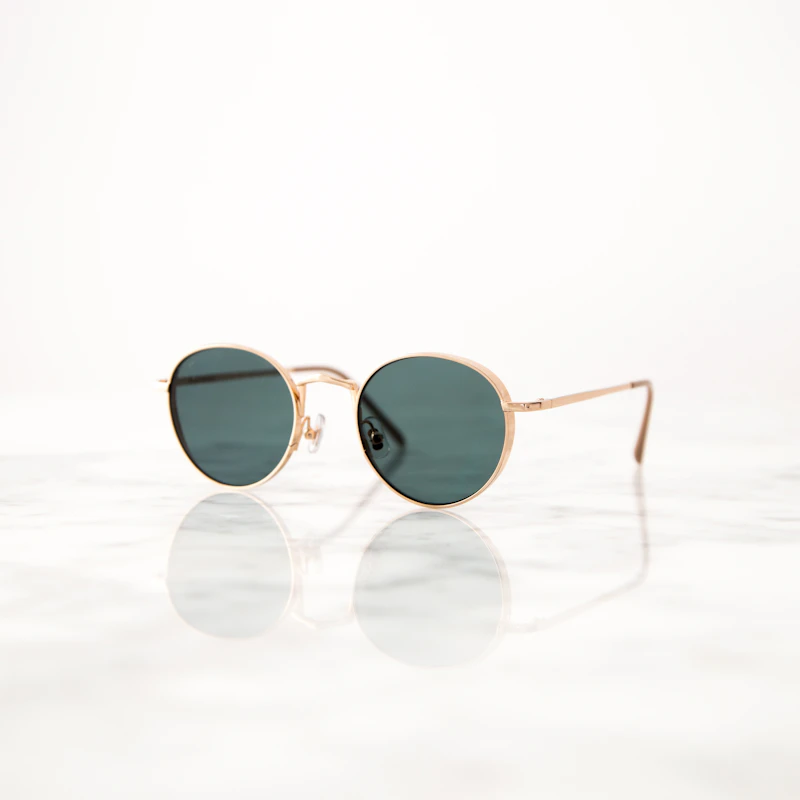
This is almost always overlooked. Warm skin tones (golden, olive) pair well with brown, amber, and tortoise lenses. Cool skin tones (pink, blue undertones) work better with gray, green, and blue lenses. Getting the lens color right can make an average frame look intentional.
The best approach: try on frames in person, take a photo in natural light (not store fluorescents), and evaluate at home. Most eyewear stores will hold frames for 24 hours if you ask.